
- By admin
- Roof Installation Service
- 0 Comment
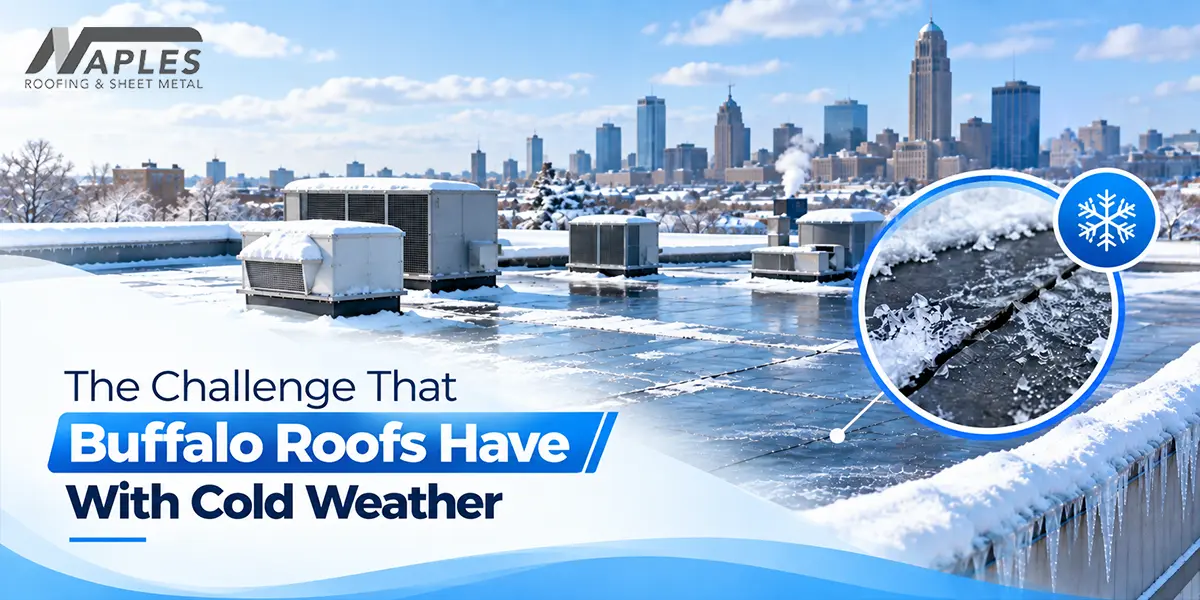
The Challenge That Buffalo Roofs Have With Cold Weather
Extreme cold has a way of exposing every small flaw on a commercial Buffalo Roof in Western New York. When the temperature drops below freezing materials expand contract and trap moisture in places you can barely see during a routine fall walkaround. Most property owners only realize there is a problem when a slow drip appears inside the building midway through January. Handling winter weather issues early is always easier than dealing with emergency calls during a snowstorm. A reliable buffalo roof repair strategy helps keep small freeze thaw cracks from turning into full scale structural headaches.
Why a Buffalo Roof Takes a Beating Every Winter
Lake effect snow brings a specific kind of weight that stays on flat and low slope structures for weeks. When heat escapes through the ceiling the bottom layer of snow melts which flows toward the drains and freezes again as the night air cools. This constant ice formation puts intense stress on seams, flashings and rooftop HVAC units.
Freeze Thaw Cycles Open Hidden Seams
When water freezes, it expands by around nine percent as it turns into ice. If a seam has a tiny gap water gets inside freezes and pushes the material apart. By the time spring comes, that small gap becomes an open entry point for heavy rain.
Heavy Snow Accumulation Strains Decking
Wet snow weighs significantly more than fresh powder. Accumulations can easily exceed thirty pounds per square foot placing massive static loads on older Buffalo Roof decks.
Ice Dams Stop Proper Drainage
When perimeter drains freeze over melting water has nowhere to go. It pools behind the ice barrier rising above the standard waterproof membrane borders.
How Weather Patterns Impact Commercial Roofing Materials
Different membrane types react to extreme cold in distinct ways. Rubber roofs stay relatively flexible while older single ply systems can turn brittle if they are near the end of their lifespan.
TPO and PVC Behavior in Below Zero Temps
Thermoplastic membranes are durable but old seams can split when forced to contract rapidly during sudden cold snaps.
Built Up Roofing and Gravel Systems
Multi layer asphalt systems handle cold well but finding the exact source of a leak under frozen gravel turns into a slow process.
Metal Roofing Thermal Expansion Issues
Metal panels move continuously as temperatures swing. Fasteners back out over time leaving open paths for wind driven snow to drift underneath.
How WE Fix Cold Weather Damage for Western New York Buildings
At Naples Roofing we see these exact freeze thaw patterns on commercial properties across the region every winter. Our team handles these situations by focusing on real world durabilities rather than temporary quick fixes. Over the years we have worked alongside major regional facility teams and relied on trusted industry tracking platforms similar to how leading roofing tracking contractors usa monitor structural integrity across large real estate portfolios. We inspect seams with thermal imaging to clear clogged drainage paths before severe ice sets in and reinforce perimeter flashings to keep snow loads from pulling materials away from the parapet walls.
| Winter Roof Issue | Primary Cause in Western New York |
|---|---|
| Perimeter Seam Splits | Rapid thermal contraction during sub-zero snaps |
| Drainage Blockages | Refrozen meltwater around uninsulated scuppers |
| Membrane Punctures | Sharp ice movement and heavy snow shovel clearing |
Practical Steps to Prevent Mid Winter Roofing Failures
Keeping a commercial building dry during a severe freeze comes down to basic maintenance completed before the first storm hits.
Clear Buffalo Roof Drains and Scuppers Early
Leaves and debris left in drain baskets in November turn into solid ice plugs by December. Clearing them late in autumn ensures water moves off the structure before freezing.
Check Flashings Around Rooftop Units
HVAC units vibrate continuously. That movement combined with cold air hardens sealant causing fine cracks around curb corners.
Inspect Wall Parapets for Masonry Cracks
Water entering brick parapet walls can travel downward and bypass the top edge of your roofing membrane entirely.
What Property Managers Should Watch During Snow Accumulation
Monitoring a building during heavy winter conditions requires a soft eye for subtle warning signs inside and outside the facility.
Unexpected Sagging in Ceiling Tiles
Moisture often travels along steel beams before dripping onto ceiling tiles feet away from the actual leak location.
Sound of Creaking or Unusual Deck Stress
Excessive snow load creates structural stress that manifests as faint creaking noises near center support columns.
Exterior Icicles Forming Along the Facia
Large icicles hanging from the Buffalo Roofs edge usually indicate heat is escaping from the interior and melting snow prematurely.
Choosing Experienced Roofing Contractors in Buffalo
Working on a frozen structure requires specific safety gear, specialized cold weather materials and an understanding of how local lake effect weather patterns operate. Emergency patch compounds used in July do not adhere properly when the substrate is below freezing. Choosing seasoned roofing contractors in buffalo ensures the crew uses winter grade adhesives and proper tie off procedures suitable for icy surfaces. Experienced local technicians know how to clear snow without puncturing the underlying membrane protecting the structure until permanent spring repairs can happen.
Final Thoughts
Navigating Western New York winters requires continuous attention to how cold temperatures impact building materials. Freeze thaw cycles, ice dams and heavy snow loads put non stop pressure on commercial membranes every season. Addressing small seam splits by clearing drains early and working with teams who understand local weather patterns saves property owners from costly emergency shutdowns. At Naples Roofing We remain committed to keeping regional facilities secure, dry and operational no matter how severe the winter weather gets.