
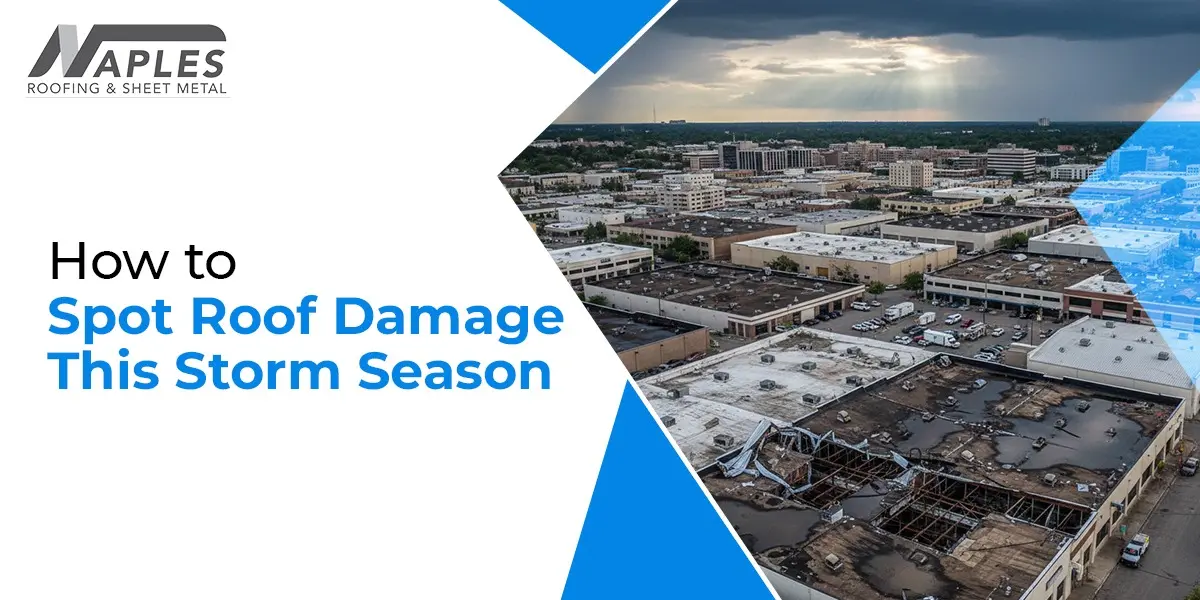
How to Spot Roof Damage This Storm Season
The first big storm of the season always feels dramatic. The wind gets loud. The rain starts hitting sideways. You tell yourself the building has handled worse and maybe it has. But the next morning, when the parking lot is wet and quiet again, that’s when the real question creeps in. Did the roof hold up Spot Roof Damage or did something shift up there that you won’t notice until it’s too late?
That’s usually where problems start. People think roof damage is obvious like shingles flying off or water pouring through the ceiling tiles. Sometimes it is but most of the time, when you try to Spot Roof Damage, it’s smaller, subtle and easy to ignore if you are not paying attention. Storm season in Western New York does not play around quietly.
Here’s The Quick Things To Notice For Spot Roof Damage.
It Rarely Looks Like a Disaster at First
Here’s the truth. Most commercial roof problems do not announce themselves loudly. They whisper.
You might see a tiny water stain in the corner of an office ceiling. Just a faint ring. Someone puts a bucket under it, someone else says they will “keep an eye on it.” And then everyone moves on.
This is where people get it wrong.
That small stain usually means water has already been sitting somewhere it should not be. It means the membrane or flashing may have lifted during high winds. It means drainage might be backing up. And water, once it finds a path, does not forget it.
Storms here come with heavy rain, strong gusts, sometimes hail. Even a solid commercial roof can take a hit. Especially if it is not brand new. No one really looks at their roof regularly. Let’s be honest.
The Wind Does More Than You Think
People talk about rain damage all the time. But the wind is sneaky. High winds can loosen edges, lift seams, or shift rooftop units just enough to break a seal. You will not see it from the ground. Everything looks normal. The roof still looks flat and calm from the parking lot.
But up close, it can be different. Loose flashing around vents. Tiny gaps near skylights. A corner of the membrane that is not fully sealed anymore. It does not take much. Once water gets under that surface, it spreads quietly. We have seen buildings that looked fine after a storm. A week later, the insulation was soaked. The damage was already done.
This is why after strong storms, some property managers call a commercial roofing contractor in Western New York just to check things over. Not because something is leaking yet. Just because they know waiting is risky. That kind of thinking usually saves money in the long run.
Water Stains Are Not the First Sign
Most people think ceiling stains are the first warning. They are not. Sometimes the first sign is a slight musty smell or a draft that was not there before or employees mentioning that one section of the building feels damp after heavy rain. Subtle things. Flat commercial roofs rely heavily on proper drainage.
If drains clog with debris during storms, water pools. And standing water is heavy. It adds stress. It finds weak spots. Look for small puddles that linger days after rainfall. That is not normal. It means the slope or drainage is not working as it should. Over time, that pooling breaks materials down faster.
It is slow damage. But it is real.
Flashing and Seams Tell a Story
If you ever get the chance to look at a commercial roof up close, pay attention to the seams and flashing. That is usually where problems begin. Storm winds love edges. They test them. Flashing around HVAC units, vents, and parapet walls can loosen. Sealants can crack. And once that barrier is compromised, water has a clear entry point.
A lot of roof leaks trace back to these small transitions. Not the big open areas. This is why a good inspection focuses on the details. Not just scanning the surface and calling it a day. And when damage is found early, a commercial roof repair contractor in Western New York can often handle it with targeted repairs instead of full replacements.
Repairs are never fun but catching them early changes everything.
Hail Damage Is Easy to Dismiss
Hail does not always leave dramatic dents you can see from below. On certain roofing systems, hail creates small punctures or weak spots that are hard to notice without a trained eye. The surface might look intact, but the protective layer has been compromised.
Over time, those tiny impacts turn into leaks not immediately. Sometimes months later but that delay makes it tricky. People forget about the storm by then. They blame the roof’s age or they assume it just “wore out.”
The truth is, that hailstorm weeks ago may have started the problem.
The Inside Clues Matter Too
Roof damage is not only about what you see outside. Inside the building, look at ceiling tiles that sag slightly. Walls that show bubbling paint. Even small drips near light fixtures. Those are not random. They connect to something happening above.
Once water starts affecting insulation or structural elements, repairs become more complex. This is usually where panic sets in. We all must have seen building owners wait too long. They hope the leak will dry up. Eventually they put off inspections.
Then one heavy storm hits and suddenly they need emergency roofing services in Buffalo because water is actively coming in. Emergencies cost more. They disrupt business. They create stress that could have been avoided.
Roof Maintenance Is Boring, But It Works
No one gets excited about roof maintenance. It is not flashy or does not feel urgent. But regular inspections after major storms make a difference clearing drains, checking seams. Making sure rooftop equipment is secure. These small actions prevent bigger headaches later.
Storm season here can be unpredictable. One week is calm. The next feels like the sky is testing every weak point on your building. Commercial roofs are built to last, yes. But they are not invincible. Age, prior repairs and even small installation flaws show up when weather gets rough.
What most people miss is that roof damage is rarely about one big event. It is usually a series of small hits over time such as wind, rain, hail, freeze and thaw. Each storm adds a little stress. Eventually, something gives.
Final Thoughts: Trust Your Gut After a Storm
Sometimes you just know. You walk into the building after a heavy storm and something feels off. Maybe it is the smell, faint stain or nothing you can clearly point to. Do not ignore that instinct. Roofs are easy to forget about because they are out of sight but they protect everything underneath like equipment., inventory, offices and people.
The cost of ignoring small signs often shows up later in ways that are far more expensive and far more disruptive. Storm season is not just about surviving the weather. It is about paying attention after the sky clears. Taking a few minutes to look up. To check corners. To ask questions.
Because spotting damage early is not dramatic. It is quiet work, a little inconvenient but it is worth it. When you take the time to really Spot Roof Damage before it spreads, you are not just protecting a roof. You are protecting the entire building and everything inside it and around here, with the kind of storms we get, that attention makes all the difference.