
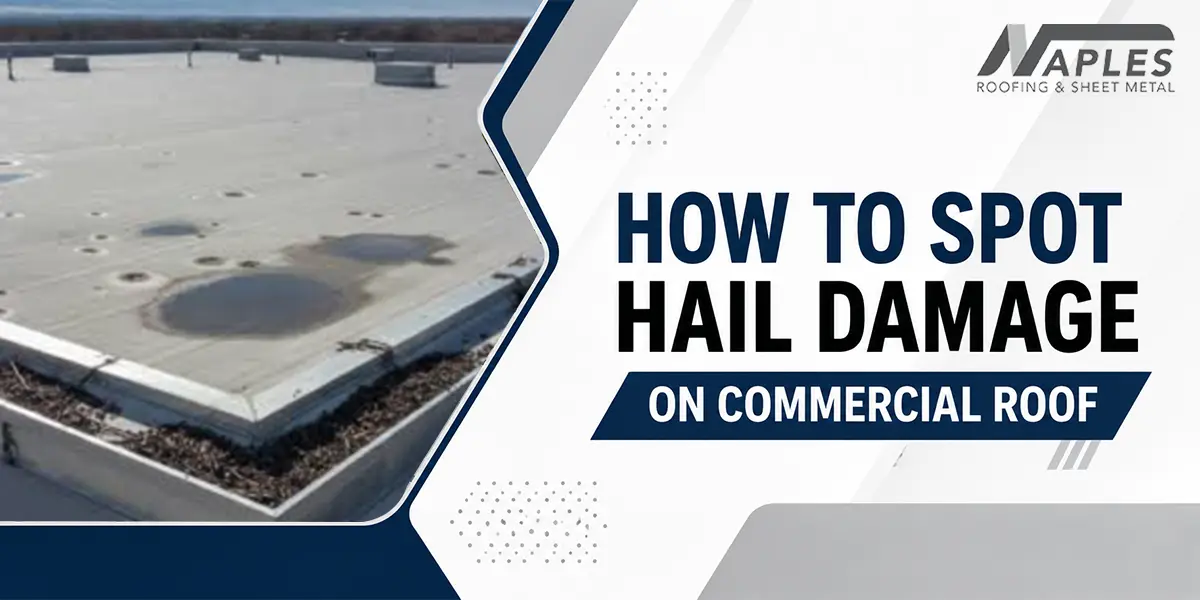
How To Spot Hail Damage On Roof?
Every spring after severe weather hits Western New York, building owners walk outside, look up and assume everything survived because there are no obvious leaks inside. Heavy ice strikes often leave silent structural issues that stay hidden from ground level for several months. Ice pellets striking asphalt, modified bitumen or rubber membranes strip away protective coatings without tearing through immediately. Property managers end up dealing with sudden ceiling stains as well as spot hail damage when autumn rains arrive. Knowing how to assess overhead conditions or scheduling professional Roof Maintenance Services in Buffalo saves thousands in premature deck replacement down the line.
Why It Takes Time to Spot Hail Damage on Roof Decks
Walking around a commercial complex after an intense storm usually feels reassuring if there are no dripping pipes or fallen branches. Most property directors look up at the eaves, see neat edges and move straight to other tasks. The tricky part about severe weather impacts is that stone granules cushion the initial force while the underlying matting fractures underneath. Sunlight continues heating the dark bitumen layer week after week, slowly widening microscopic gaps until autumn rain storms force water past the insulation board.
Look at metal vents to spot hail damage fast
Soft metals record impact severity long before flexible membranes reveal open tears. Walk along the parapet or check rooftop HVAC housing boxes, aluminum ridge vents and exhaust caps. Circular dints on soft aluminum indicate that ice pellets struck hard enough to compromise the surrounding roofing felt. If aluminum covers show heavy dimpling, the flat membrane beneath took a similar pounding.
Check gutter runs when trying to spot hail damage
Heavy ice strikes scrape loose protective surface granules, sending dark sandlike residue down drainage paths. Check the base of downspouts or drainage catch basins along paved walkways. Finding thick layers of coarse black sediment means the top protective layer of your asphalt structure is washing away. Granules act as a shield against ultraviolet rays. Stripping that layer leaves raw asphalt vulnerable to rapid heat degradation and drying.
Ground Level Clues Show Overhead Problems Early
Directional storm winds drive ice pellets at sharp angles, leaving telltale signs on vertical surfaces before anyone sets foot on a ladder.
Vinyl siding, wooden trim and metal door frames show shallow indentations after violent wind gusts. When side walls display consistent impact marks, upper flashing units almost certainly experienced similar stress. Parapet walls and corner caps often bear the heaviest force, causing subtle seam separation that allows moisture to creep under edge flashing during heavy downpours.
Practical Ways to Spot Hail Damage on Roof Surfaces
Pitched asphalt shingles and flat commercial membranes respond differently to impact. Physical indicators depend heavily on material age and density.
Examining shingle granules to spot hail damage
On pitched surfaces, look closely for dark circular bruises where granules appear pressed inward. Gentle pressure with a thumb reveals whether the underlying fiberglass structure feels soft or springy. Spongy spots mean internal fibers fractured under impact, creating paths for water intrusion during freeze and thaw cycles.
Over time, seasonal temperature shifts pull those weakened fiberglass threads apart. What seems like a minor cosmetic mark during May transforms into an active interior drip by November.
Membrane Splits on Flat Commercial Systems
Commercial flat setups built with singleply TPO, EPDMor modified bitumen require careful evaluation. Ice pellets create subtle starshaped fractures or tiny circular rings across TPO surfaces. These microtears are difficult to see under bright midday sun, yet they break the waterproof barrier completely.
Water creeping beneath singleply sheets saturates underlying polyisocyanurate insulation boards long before liquid shows up on ceiling tiles inside office spaces. Wet insulation loses thermal resistance, driving up cooling costs while rusting steel roof decks from within.
In our work handling commercial roof maintenance buffalo projects for industrial warehouses and retail centers across Western New York, our teams regularly discover wet insulation beneath membranes that appeared completely smooth from thirty feet away. Building managers often express surprise when infrared moisture scans reveal gallons of trapped water under dry surface sheets. Routine checks with detailed photo records protect property value while keeping manufacturer warranties valid.
Seasonal Maintenance Protects Long Term Investment
Addressing minor surface bruises early prevents costly full scale tear offs. Establishing an annual review schedule keeps facility directors informed about minor seam lifts, clogged scuppers and localized membrane bruising.
When severe weather rolls through the region, having established maintenance records simplifies insurance claims immensely. Detailed photo logs taken before and after storms provide clear proof of sudden storm destruction versus gradual wear with spot hail damage. Our crews at Naples Roofing often remind building supervisors that a small patch applied early preserves the underlying deck for decades, avoiding major business interruptions.
Identifying subtle storm impacts early protects building structures from widespread moisture damage and unexpected interior leaks. Ground observations, metal vent checks and granule tracking offer reliable indicators before major structural issues develop. Partnering with experienced specialists for routine commercial roof maintenance services ensures hidden membrane tears receive immediate care, preserving insulation efficiency and overall property value throughout every Western New York season.
Conclusion
Naples Roofing offers complete commercial and industrial roofing solutions across Western New York. First our team specializes in flat and low-slope commercial setups, including TPO, EPDM rubber, modified bitumen and built-up roofing installations. We handle full retrofits and structural deck replacements for industrial buildings. Furthermore we deliver proactive commercial roof maintenance and detailed inspection programs for spot hail damage. As a result property managers can easily catch hidden storm damage, membrane tears and wet insulation early.
On the residential side Naples Roofing provides expert shingle repairs and full roof replacements. Meanwhile, our technicians handle custom skylight installations, gutter maintenance and emergency leak fixes. Additionally we fabricate custom sheet metal flashing to ensure precise waterproofing around critical seams and edges. Ultimately by combining modern leak detection with personalized preventive plans, Naples Roofing protects both businesses and property owners against severe seasonal weather.