
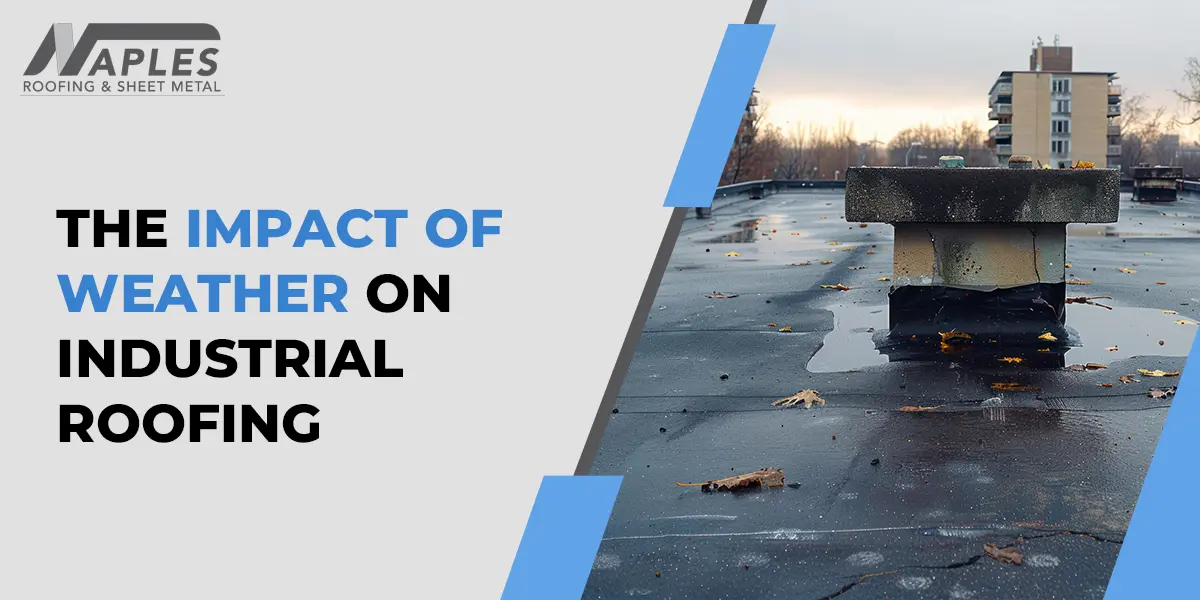
The Impact Of Weather On Industrial Roofing
There’s always that one morning when the building just feels… off. This won’t feel very attentive but it will have a big leak pouring through the ceiling. It all starts with a quiet dampness in the air or a faint stain that wasn’t there last week. People notice it slowly when someone points it out or shrugs it off. That’s usually how it starts.
If you’ve spent enough time around large facilities, you begin to see a pattern. Roofs don’t fail loudly at first. They shift, absorb and hold on longer than they probably should. Then one season pushes them just a little too far. In places like New York, where the weather doesn’t stay predictable for long, that tipping point comes quicker than most expect, especially when you are relying on an industrial roofing contractor in new york who may or may not have planned for the long haul.
Here are some real life impact of weather that happen to roofs.
Weather doesn’t damage roofs all at once.
It builds quietly, then shows up all at once. It’s rarely one storm. People like to blame that one heavy snowfall or that one week of rain but if you watch closely, the damage usually builds in layers. A little expansion here, small crack there. Eventually water sits where it should not, dries, then comes back again. The roof remembers all of it. Cold months tighten everything, materials contract, seams pull slightly, nothing visible yet. Then warmer days come in, things expand again but not perfectly back to where they were. It creates this slow misalignment that no one really notices until the ceiling starts telling the story.
By then, it’s already been happening for months.
Weather exposure feels different on industrial roofs.
Large surfaces take the hit differently; An industrial roof is not like a home roof. It’s wider, flatter, and honestly, a bit more exposed. There’s nowhere for stress to hide. Wind moves differently across these surfaces. Water collects in ways that are not always obvious. Snow does not slide off easily. It just sits there, heavy and quiet, pressing down day after day. You walk into some of these buildings and everything seems fine. Operations running, people working, no visible issue. But if you step outside and really look at the roofline, you can almost tell where the strain is building.
It’s subtle such as slight dips, slight discoloration. Nothing urgent yet.
Weather patterns are less predictable now.
Roofs are expected to handle more than they were built for. This part comes up more often in conversations lately when impact of weather shows up. People who have managed properties for years will say the same thing in different ways. The seasons feel… uneven. Winters stretch longer some years, then disappear too quickly the next. Rainfall comes harder, not just longer. Roofs that were installed with a certain expectation are now dealing with something else entirely and it shows.
Being at a facility where the maintenance team kept patching the same section over and over. It wasn’t poor work. It just never held for long. Eventually, someone mentioned they had recently worked with a commercial industrial roofing contractor who approached the issue differently with less patching, more understanding of how the building interacts with changing weather patterns. It stuck with me because it wasn’t presented like a solution more like a shift in thinking.
Weather-related wear is often misunderstood.
It’s not always about visible damage. A lot of people wait for obvious signs like leaks, drips, stains spreading across the ceiling but the earlier signs are quieter. There’s a certain smell after rain that lingers longer than it should. Slight temperature changes inside the building. Areas that feel colder or warmer without explanation. Even small things like increased energy bills that no one connects back to the roof at first.
It’s easy to miss or ignore. Honestly, sometimes it’s easier to just deal with it later until later becomes more complicated than it needed to be.
Weather stress repeats in the same places.
Those spots rarely fix themselves. If a section of the roof has struggled once, it usually struggles again like corners, edges and areas where water tends to sit. Places where equipment is installed. These spots go through more stress than others, especially with constant weather shifts. You’ll see temporary fixes like sealants, small repairs. They work for a while. Then the same issue shows up again, just slightly worse. It becomes a cycle.
This is where experience starts to matter more than quick fixes. Some roofing contractors in buffalo have seen these patterns enough times to predict where the next issue might show up, even before it does. It’s a quiet understanding that certain parts of a roof are always under more pressure.
Weather doesn’t wait for the right time
It shows up when it wants, and roofs have to be ready. There’s never a convenient moment for roofing problems. It happens during peak operations, busy seasons. During times when shutting things down is not really an option. That’s part of the frustration; not just the damage itself, but the timing of it.
Because the weather does not care about schedules. You’ll hear people say they planned to check the roof “soon.” or that maintenance was on the list. It probably was, just not urgent enough at the time until it became urgent.
Weather makes small decisions matter more.
Material choices, installation details, even timing; it’s interesting how two similar buildings can respond so differently to the same weather. One holds up fine. The other starts showing issues within a few seasons. Often, the difference comes down to decisions that didn’t seem huge at the time. The type of material used. How seams were handled whether drainage was planned carefully or just assumed to work with small things but they add up.
People casually mention teams like Naples Roofing in conversations, just as an example of work that seemed to last longer under pressure. It’s not something people bring up immediately. More like, after seeing enough repeat problems elsewhere, they start noticing when something actually holds up.
What do people think about roofing?
Slowly, and usually after a problem. No one really thinks about the roof when things are fine. It’s only after dealing with repeated issues that the mindset shifts such as less about quick repairs and more about understanding how the building handles weather over time. It’s merely a practical one, not a technological one. You start asking different questions. Not just “how do we fix this,” but “why does this keep happening here?”
Sometimes, that question changes everything.
Summary
Weather leaves its mark, even when things look fine and that’s the part most people underestimate. From the outside, a roof can look perfectly okay with no visible damage, no urgent signs. Everything seems intact. Weather has a way of working beneath the surface gradually and patiently. It tests the same points over and over again until something gives. By the time it becomes visible, it has already been there for a while. That’s probably the hardest part to explain to someone who hasn’t dealt with it before.
You don’t always see the problem forming. You just notice when it finally shows up. And till then, you’re not really starting fresh. You’re catching up.