Spotting the Signs of an Improper Roof Installation
Although every roof may appear strong from a distance, hidden installation flaws can cause big problems later. Therefore, it’s important to recognize the warning signs early to avoid costly repairs. Many commercial roofers in USA emphasize regular checks because even small errors in installation can lead to leaks, damage, and reduced roof life. This blog will explain to you what to look for and how to respond to them. In fact, Naples Roofing recommends routine inspections, especially after storms, to catch issues before they turn severe.
Why Improper Roof Installation Hurts Your Investment
Every roof plays a key role in protecting your building and everything inside. So, when it’s installed incorrectly, it can create a chain reaction of damage. Improper roof installation can result in water leaks, mold, high energy bills, and structural issues. Furthermore, poor installation may also void your warranty or insurance claims.
In fact, a leading roofing contractor in New York noted that most early roof failures come from incorrect installation, not from bad weather or old materials. That’s why expert roofing services like Naples Roofing focus heavily on proper workmanship and post-installation inspections.
Improper Roof Installation: Surface-Level Clues
These signs are visible without getting on the roof. You can spot them during a simple walk-around or with a pair of binoculars.
-
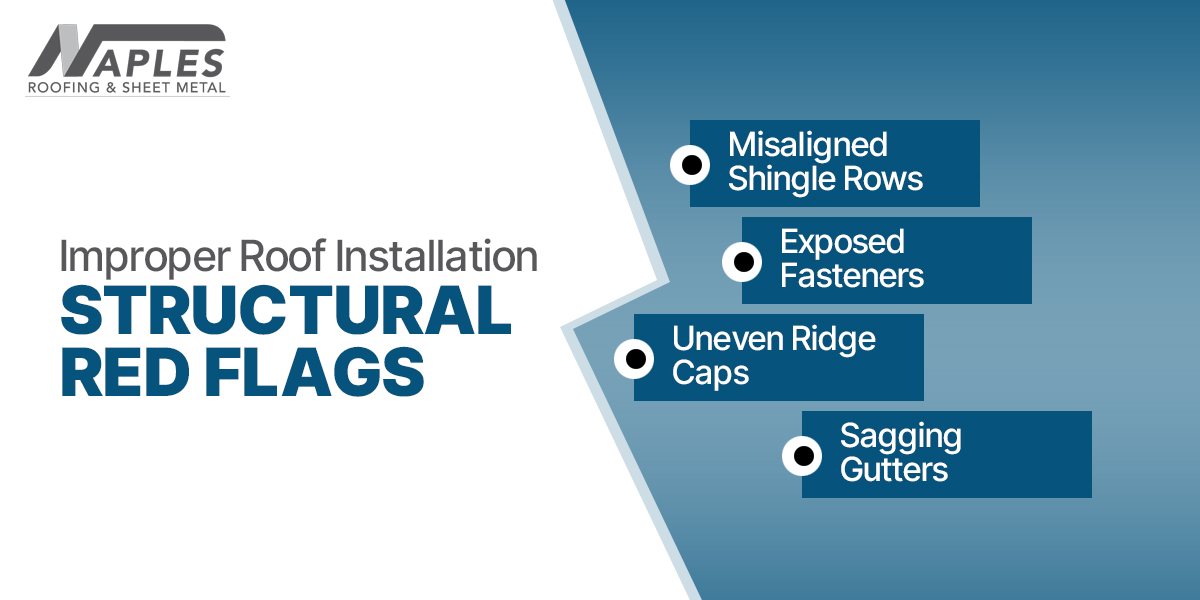
Misaligned Shingle Rows
Shingles should follow a straight, clean line. If you see crooked or uneven rows, the installation was likely rushed. Misaligned shingles make the roof look messy and allow wind to lift the edges more easily, causing potential leaks.
-
Exposed Fasteners
Fasteners, such as nails or screws, should be covered by the next row of shingles or sealed correctly. If they are exposed, water can enter through those points, leading to leaks. With time, the sealant might wear out, which would result in faster roof failure.
-
Uneven Ridge Caps
Ridge caps must be carefully kept flat and straight on the roof’s peak. If they look crooked or lifted, it means the roofer didn’t align or secure them properly. This allows water and wind to get in, leading to damage under the roof.
-
Sagging Gutters
Gutters should slope slightly toward the downspouts to allow water to flow. If they sag or overflow during rain, water can back up under shingles or over fascia boards, causing wood rot or leaks inside the walls.
Improper Roof Installation: Structural Red Flags
Some issues aren’t immediately visible but still show signs if you know where to look.
-
Inconsistent Deck Plane
Look at the roofline from a distance. If the surface dips or appears wavy, it could mean the sheathing (wood under the roof) isn’t properly attached. This weak base can lead to materials sagging and breaking over time.
-
Insufficient Drip Edge
A drip edge is a metal strip along the edge of the roof. It should extend beyond the edge of the roof and must channel the water into the gutters. If the edge is missing or too short, water may leak into the fascia board and walls, causing rot or mold.
-
Loose Flashing
Flashing is installed around vents, chimneys, and skylights. It should be tightly secured. If you see gaps or movement in these areas, it means water can easily enter. Wind and rain can worsen the problem quickly.
-
Underlayment Missing at Valleys
Valleys are the confluence of two roof sections. They carry a lot of water during rain. If there’s no extra protection (underlayment) in the valleys, water can easily seep through, leading to wet insulation and ceiling damage.
Improper Roof Installation: Moisture and Interior Hints
Water damage often begins quietly inside your building. These clues often show up weeks or months after the roof is installed.
-
Ceiling Spotting
If you see brown or yellow spots on your ceiling, it’s a clear sign of water leaks. The problem usually starts at the roof and works its way down. Acting early can save thousands in repairs.
-
Mildew Odor in Attic
A musty smell in your attic usually means water is trapped. Mold grows quickly in wet, dark places. Check vents and roof openings for damp areas. A reliable team like Naples Roofing can inspect and fix poor ventilation fast.
-
Peeling Wall Paint
Paint that bubbles or peels near the top of walls may signal a roof leak. Water travels down the wall slowly and causes the paint to lose grip. These signs should not be ignored.
-
Rising Energy Bills
If your heating or cooling costs suddenly increase, your roof may not be insulated correctly. Improper roof installation allows air leaks, which forces your HVAC system to work harder.
Common Warning Signs of Improper Roof Installation
Frequent checks can catch early problems. Trusted names like Naples Roofing suggest looking after storms or heavy wind events.
- Water Ponding on Low-Slope Roofs
Flat or low-slope roofs should drain quickly. If water sits on the surface for more than two days, the slope is not working. This causes wear and may lead to leaks. - Blistered Membranes
If you have a single-ply roof, look for bubbles or blisters. This means air or moisture got trapped under the membrane, which happens when adhesives fail or materials are not laid flat. - Granule Loss in Gutters
If you see many granules in your gutters, your shingles are breaking down early. Poor nailing or rough handling during installation often causes this. - Ice Dams Forming Early
Ice dams occur when heat escapes from your roof and melts snow unevenly. Poor insulation and bad ventilation are the culprits. This signals improper installation that needs fixing. - Sudden Roof-Fastener Pops
When nails pop out of shingles, it means they weren’t placed correctly or deep enough. Temperature changes can make this worse. Water can sneak through the open holes left behind.
Action Steps After Discovering Defects
- Photograph Every Issue
Take clear photos of all damage. These help when dealing with contractors or filing warranty claims.
- Review Original Contract
Check your paperwork. See what warranties or guarantees the contractor gave you.
- Contact Installer First
If you spot problems, contact the roofer who did the job. Many will return to fix mistakes.
- Request Third-Party Inspection
Hire a professional not linked to your roofer. Their inspection is unbiased and more trusted in disputes.
- Plan Preventive Maintenance
Set up regular checks. A semi-annual inspection can prevent long-term issues and save money.
Conclusion: Never Ignore Early Signals
Small roof issues become big problems if left alone. Therefore, you must check your roof often and fix problems right away. Catching these signs early helps avoid costly repairs and protects your property. If you’re unsure where to start, Naples Roofing can help. Our experienced team will check your roof thoroughly and explain everything clearly. For expert roofing services in US, reach out to our office and schedule a free consultation. Stay safe, stay protected, and trust only trained professionals.